TV Movie Review: Miami Vice: Brother’s Keeper
Written by Grady Fiorio Original Publishing Date: June 1st, 2026 Rating 4.5/5
The way we used to be together... It was real, wasn't it?
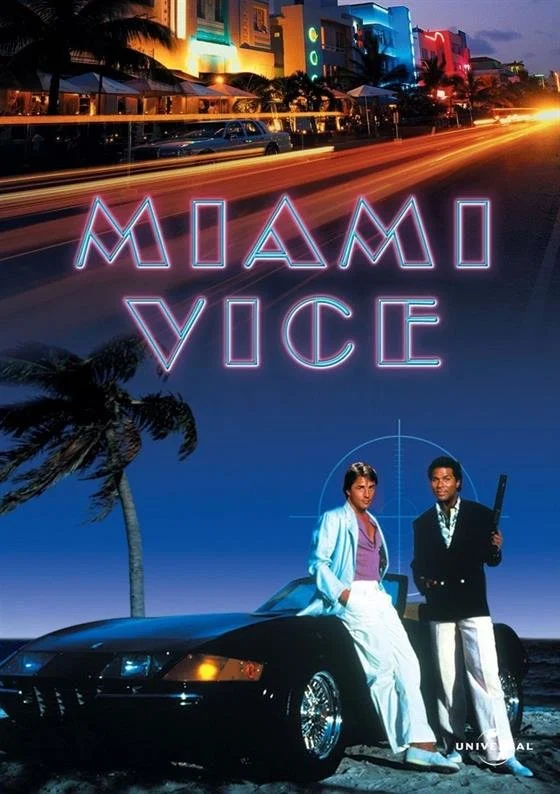
Miami Vice: Brother’s Keeper
Director Thomas Carter Runtime 1 Hr 32 Min Format Streaming Release Date 1984
The year is 1984. The weather is hot. The women are beautiful. And the streets of Miami are sun-soaked in cocaine and self-loathing. In the 80s, Miami Vice was the king of cool. Supercars, big stars, bigger shoot-outs, and a soundtrack like you wouldn’t fucking believe. The series follows the now-iconic duo, Crockett and Tubbs, as two undercover vice cops in Miami, bringing the heat to all the nastiness of a sunburned underworld. Famously pitched as “MTV Cops”, the series was highly influential in defining the music, style, and tone of the 80s, becoming one of TV's seminal hits, bringing a true cinematic presence to small screens like never before. But this and much more have already been said a 1000 times about Miami Vice. What doesn’t nearly get enough love is the tone setter of it all, Brother’s Keeper, the series’s two-part TV movie, pilot episode. While still maintaining the iconic style of the series, Brother’s Keeper carries deep undertones about how pain is used as a weapon and becomes a shield for men trying to express, suppress, and explore emotions.
Spoilers ahead. You can watch the pilot for free on Tubi here.
Brother’s Keeper begins with a Yin and Yang of tragedy. While hunting down cocaine kingpin Calderone, Tubbs’s brother is killed in a New York shootout, and Crockett’s police partner is killed in a car bombing. It sets the tone for two men reeling from both personal and professional pain, on the path to something much darker. Things don’t get much better as we’re introduced to Crockett’s tumultuous family life as he struggles to move on from his ex-wife while still remaining a paternal figure in his son’s life. Playing cowboy along the way, Crockett and Tubbs find themselves caught in the middle of a conspiracy, as information starts leaking from the Miami police to Calderone. Plugging the leak and confronting Calderone one final time, they put the criminal behind bars, only for his escape two hours later after he’s granted a $2 million bail. The duo slowly walks off into the sunset, swearing to hunt down the crime that plagues the city.
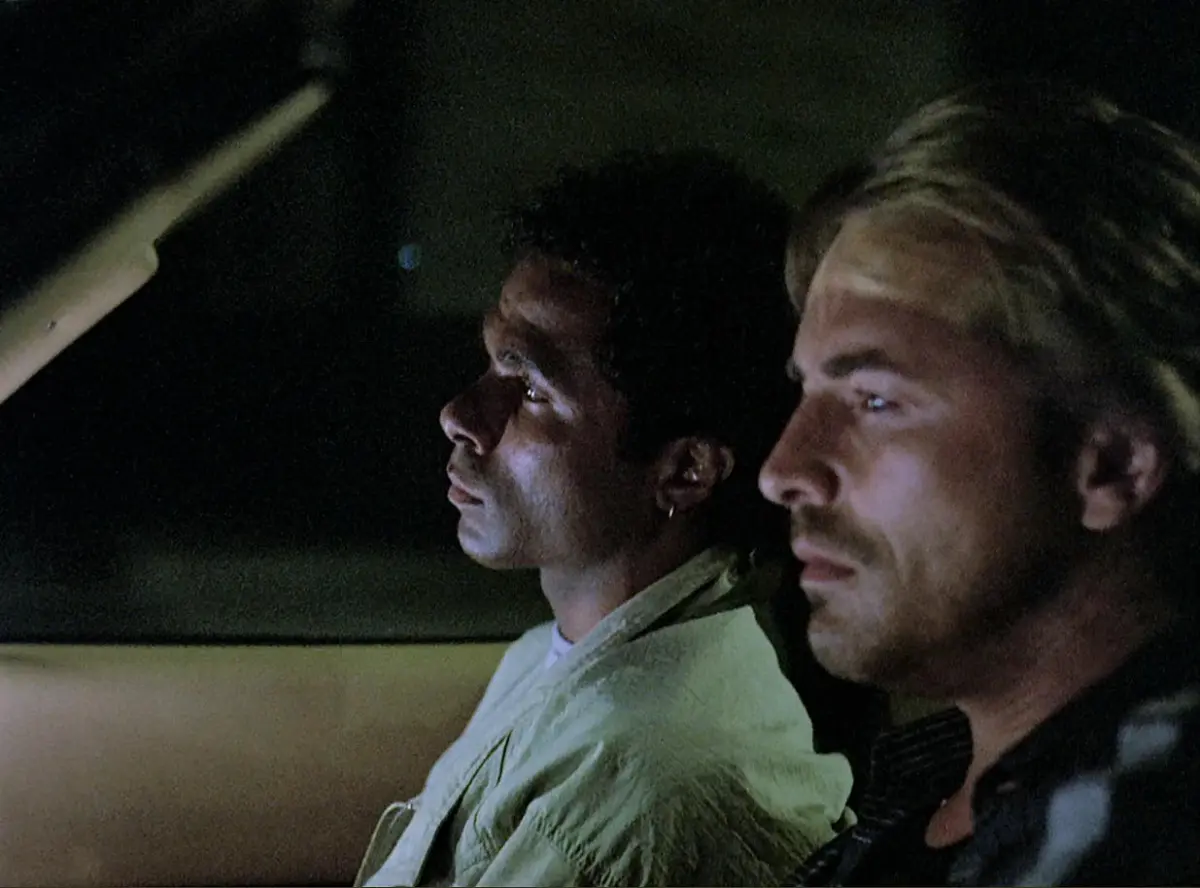
On paper, it might not sound like much. However, under the direction of Thomas Carter and produceorial hand of Michael Mann, Brother’s Keeper elevates this police procedural formula into something much deeper and darker than what was being explored on standard network television. Through long uncut takes, heavy needle drops, and a writing style that emphasizes stillness, Miami Vice crafts a cinematic language that uses escapist fantasy to speak to deeper, unspoken complexities of masculinity. It may seem like an oxymoron to use escapism as a way to dissect modern society, but Miami Vice does this expertly. To understand how Miami Vice uses cinematic language, we must first understand how society has shaped masculinity.
Controversially, plenty of think tanks like to pick apart ideas of masculinity, but very few define it. Meriam-Webster defines masculinity as “the quality or nature of the male sex: the quality, state, or degree of being masculine or manly.” Surprisingly, that doesn’t get us very far. “Masculinity is manly.” Thanks, Archimedes. Wikipedia defines this as “a set of attributes, behaviors, and roles culturally associated with men and boys. Rather than being biologically fixed, it is a fluid social construct that evolves across different historical periods and societies.” This gets us a little closer, but still leaves room for interpretation. This is because masculinity truly exists within the societal confines of those who embrace the masculine identity. It’s a personal boundary that most men have to define for themselves, usually through trial and tribulation, coming in at the peak of the most difficult points in their lives. The greatest challenges will define the character of the men who overcome them. In my own experience as a man, this standard is often defined by protection, leadership, and emotional strength. It’s the foundation for healthy growth and for helping others to create a thriving community. However, one of the most dangerous things for a man is not living up to their own standards (often after facing great hardship). When men feel they fail their masculinity, it often turns self-destructive. This masculinity vacuum leads to isolation, addiction, self-loathing, suicide, and what has been described as the male loneliness epidemic. Men in particular thrive on community, leadership, and companionship. Studies show that socially isolated men face a 41% higher risk of all-cause mortality than non-isolated peers. In a post-COVID world that has transitioned hard into online spaces and away from in-person connectivity, this has hit men directly and deadly.
Without a societal home and a severe lack of healthy male role models, bad actors like Andrew Tate and Nick Funetes have used this gap to take advantage of and twist the ideals of vulnerable men for quick cash and even more self-destruction. Often described as the “manosphere”, this has fueled the heated debate regarding toxic masculinity. Toxic Masculinity is a relatively new term in academia, often defined as an aggressive form of hypermasculinity that embraces societal domination. While many can agree that these are not beneficial traits to society, the term itself has been criticized as a reductive binary that reduces the discussion of men’s mental health, further fueling these negative traits.
While I believe that there are good intentions behind this dialogue, I’ve seen how reductive this concept has become, leading to further self-destruction in men. This is because, instead of building men up through encouragement, healthy leadership, and strong role models, toxic masculinity, as a term, is often used to victim-blame and tear down the identity of manhood. This term tells men: Your trauma, woes, and societal struggles are a direct result of your identity as a man, and your ability to overcome adversity. It's used as a bubble term to not only define men as a whole, but also the abuses they've suffered from. Sexual violence in particular is woefully underreported, in both women and men. I personally know a shocking number of men who've faced sexual abuse, and I’ve seen how this term is used to blame these same men for the horrific abuses that undoubtedly changed the course of their lives. I’ve seen it used to scapegoat everything from male custody battles to suicide rates. It turns someone’s personal identity into a weapon to undermine their abuse. It’d be ridiculous to tell women that assault, wage gaps, and domestic violence are a result of their “toxic femininity”, but the culture of discourse has allowed this for men. This reductive behavior inadvertently pushes men into these dark spaces that we so heavily criticize them for going to. We’re creating more Travis Bickles and Arthur Flecks rather than Bob Rosses and Mr. Rogers. While there might not always be a clear solution to gender struggles, our words are incredibly powerful in shaping the future we do build. The short version: we need to talk constructively, not destructively.
Now I can hear you saying, “How the hell does this tie back into Miami Vice?!” Well, firstly, thanks for staying through all this. Secondly, it relates big time. By unpacking the sensibilities of masculinity, we can get a clearer picture of how Miami Vice portrays these struggles within Crockett and Tubbs. Back to yin and yang, both men’s tragedies and personalities mirror each other. Crockett embraces sentimentality, while Tubbs seeks vengeance. Under these driving forces, pain is being used as a mask for their deeper emotions, further pushing them away from those they love and who they are inside. This directly speaks to that sense of failed masculinity and self-destruction that becomes self-exile. For Crockett, this is his failure to protect his partner and his marriage, which he’s still so deeply tied to. He can play cowboy all he likes, but no amount of women or late-night chases will change the fact that he’s madly in love with the woman he can never have. He’s literally resigned himself to the sea, living out of a boat. For Tubbs, this comes in the form of his brother, whom he can never get back, no matter what happens to Calderone. To cope, he’s left his home city of New York and has literally taken on a new identity. These men don’t have an outlet, feel that they’ve failed themselves, and resort to self-inflicted wounds out of shame until they can right their wrongs. This self-destructive ouroboros continues because even when a victory is secured, another failure alludes them, feeding back into the cycle. The only way to cope is to fight another day for Miami.
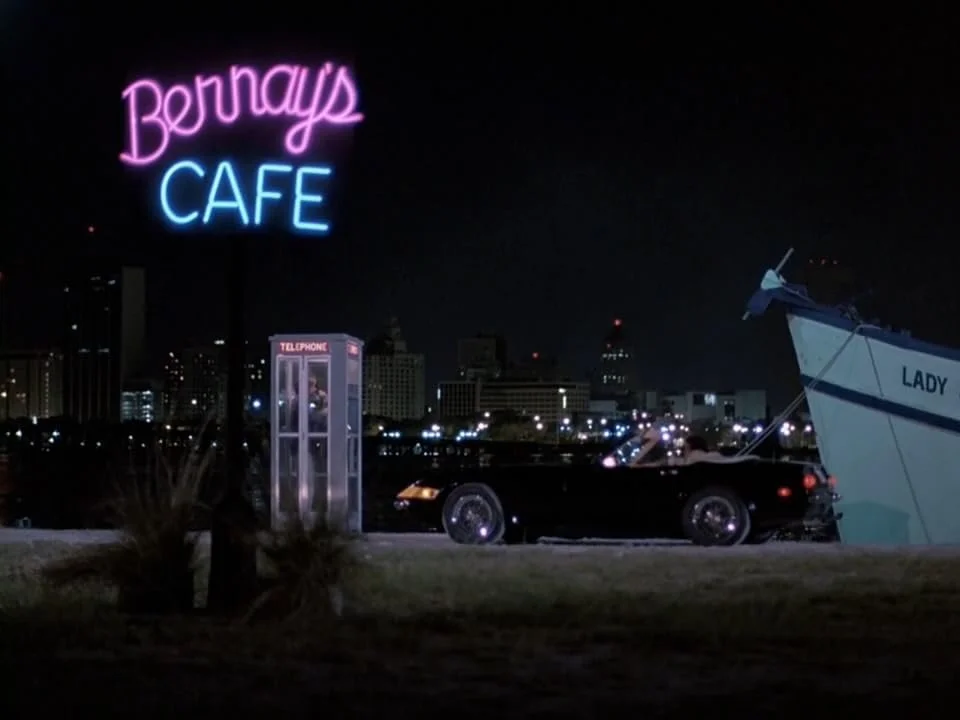
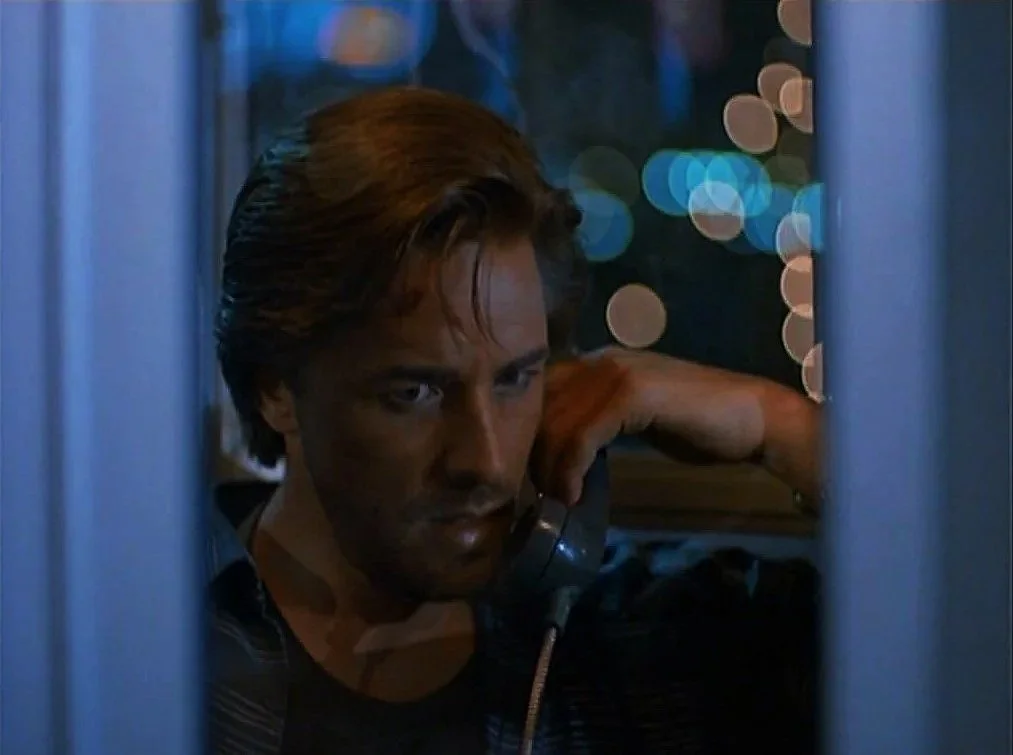
Crockett and Tubbs are two men without a societal home, even in their jobs. As undercover cops, they don’t fully belong on either side of the line, only pretending to be what they need to survive, pushing them deeper into their own underworlds. Thomas Carter’s direction heightens this sensibility by juxtaposing the high-intensity life of Miami against close-ups of the jaded yet deeply passionate faces of its two leads. The only thing louder than the music is the clothes, yet Crockett and Tubbs' silence does all the talking. But every man still has their breaking point. At the episode's climax during the now iconic “In the Air Tonight” scene (an unwritten scene added last minute by Carter), right before facing a deadly shootout with Calderone, Crockett detours to a payphone to call his ex-wife, Caroline. The entire episode, he’s been tossing and turning because he fucked up his marriage. His tumultuous love life is a driving force behind the pilot. In these final moments, he calls her and asks, “The way we used to be together. I don't mean lately. But before. It was real, wasn't it?” She responds, “Yeah, it was. You bet it was.” Even in the face of death, all Crockett wants to know is that the love he felt was real and that the time they shared meant something. For all the guilt and shame he feels, he wasn’t a total failure. In a series of stone-cold killers, gangsters, and cops, it's a rare but powerful moment of vulnerability where the mask drops and true masculinity is shown.
On a base level, I should also mention that this is a masterfully crafted 90 minutes of television. For 1984, this was way ahead of its time in terms of camera, performances, and production value. Every moment is crafted with genuine intentionality that you wouldn’t get from standard broadcast. You won’t be getting your everyday shot-reverse-shot or studio sets. Instead, Miami Vice takes us into the heart of the city and puts us into the lived realities of the people who inhabit it. We spend time with locals, in bars, clubs, and docks, listening to the music and soaking in the sun like tourists with the world’s greatest VIP pass. Yet despite the time spent in these moments of stillness, Brother’s Keeper never drags or feels like it’s wasting time. It moves at a brisk pace to the tempo of its soundtrack, making every second count. It’s truly prime television that’s simultaneously way ahead of its time, while feeling like a moment that can never be recaptured.
Could I be reading way too deep into this whole thing? Sure. Why not? This is a series famous for skimpy outfits, 80s rock, and mountains of cocaine. But in a world that has devalued interpersonal relationships, communication, and the last thinning veils of humanity we have left, why not believe in something that speaks to the heart? Intentional or not, I saw a clear throughline speaking to societal issues that are still going unaddressed 40 years later. Our world isn’t thinking about how to constructively build men while tearing down outdated societal structures. Now all we’re left with is a generation in rubble. I found myself connecting to an episode of Miami Vice much more than I thought I would. In this era of “content”, that seems exceedingly rare. Whether it was the cinematic influence of Michael Mann, the god-like voice of Phil Collins, or the cold stares of Crockett and Tubbs, it was real. Wasn’t it? You bet it was.